

SACRED WORK-part 3. Sacred Places- Visiting & Tending

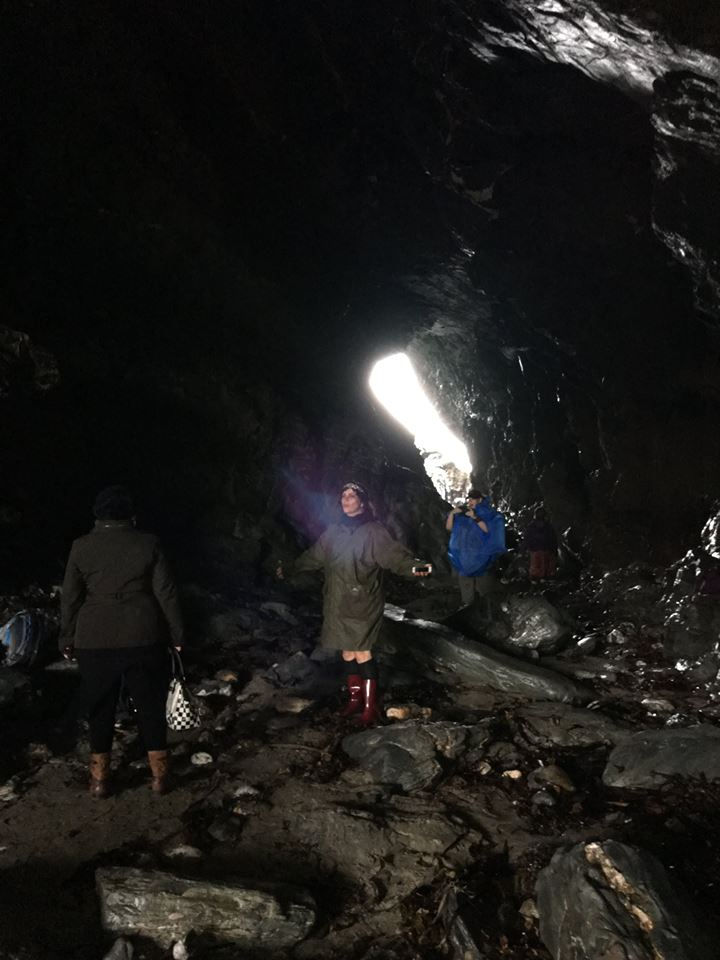
What makes a space sacred? Does it need to be crafted by mankind to fit into the notion of sacred? Is it dedicated to a god, saint, or some ancient culture? Is it a place touched by the spirits of nature? Can it become sacred from use, or was it always so?
While I am not an expert on all things sacred, I am sensitive to energy and feel that the truth lies in all the above. All of it is true! Sacred places can be connected to deities, saints, and spirits. They can be places where nature spirits and elementals are closer to our plane of existance, thin places where the world of spirit and humankind rub up against each other in miraculous ways. And yes they can be created! Not just by ancient cultures and religious organizations, but by common folks like you and I; in our backyards, woods, and along hidden paths along river beds, and in mountain groves!
The truth is the world is a sacred place!

Sacred spaces created by man are often located on Leylines, with attention to placement and the creation of the structure; utilizing sacred geometry, to create an atmosphere that enhances the feeling of sacredness.
Leylines- The invisible circulatory system of the earth. Similar to meridians and vein in accupunture these lines are created by water (veins) and electromagnetic energy (meridians).
Leylines can be found everywhere...in every yard, in every town, and country around the globe. That being said; like the body, the Earth has major veins and meridians, and minor ones. It is here on the major lines that we find stone circles, churches, judicial & government buildings, and other places intended for sacred use. (Yes, I included judicial & govenment buildings here, as they were often built with sacred intention).
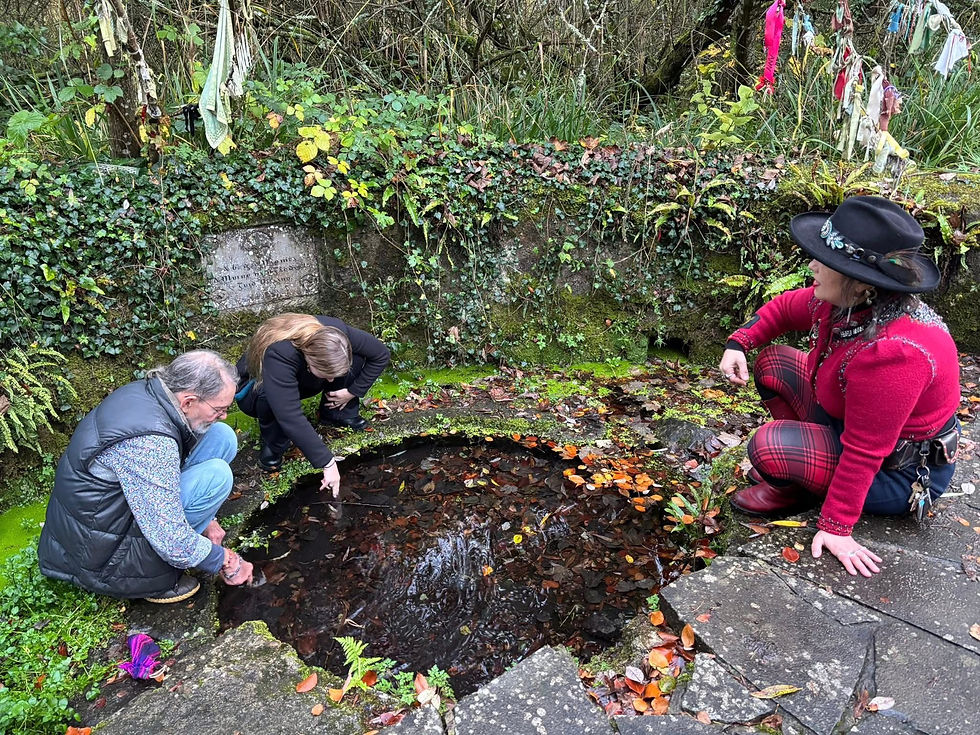
While some spaces are cared for by the greater public, and established groups, others are left to be cared for by the folks who visit them regularly.

What is the proper etiquette for approaching sacred spaces? How do we prepare ourselves for visiting public and private santuaries?
Approaching sacred places should be done with a mind set on connection...to one's self, deities, spirits, and the genius locus (spirit of place). For me this means preparing offerings; generally water from my well or other sacred places, wild flowers, a few strands of my hair, my voice...and myself! I prepare myself by setting intentions for my working, as well as choosing clothing that allows me to feel both connected to my spiritual self and ready for the environment.
When approaching a sacred place, I always take time to center myself; often doing so through sacred singing and toning. This allows me to connect more deeply with myself and the area I am visiting. The volume of my voice often depends on the nature of the space. Is it public? Will I disturb others? Is this a space I can be as loud as I want? For times when I can't sing, I may chant quietly under my breath or in my mind, utilize deep breathing, or take a moment of silence in which I introduce myself to the other beings.

What does it mean to tend a sacred space?
While many of us will stick to visiting sacred spaces, others will find themself the caretaker of such spaces; either on their own land or in the public wilds. I happen to do both! I have built temples on my property (like the stone spiral above), as well as tending a sacred grotto and cave in the White Mountains of NH.

Tending sacred space in my yard is easy! I keep it clean, visit often, and listen when the spirits and space tells me it is not open to visitors, or needs something. In truth, I have many sacrd spaces on my property...altars, spirals, grottos, and wells. Being a caretaker of your own sacred space is a powerful way to connect with the land you live on.
Tending sacred space in the wild is another story. Places we find and care for in the wild, on land that does not belong to us requires us to be more careful in our workings. Sometimes the space is meant to be closed to only those who find their way there; which means no making maps, and sharing the exact location with the public. This is how I feel about the Troll Cave; that my sisters and I have tended for over almost 20 years. While this space does not belong to us, we have a relationship with both the spirit of place and the beings that live there. As this is not the land I live on, it requires me to listen deeply to the needs of the space when I visit...
One of the things I have noticed is there are times when the Troll Cave and other spaces I tend do not want visitors. My sister and I have been asked to rearrange downed tree branches to either invite or discourage people from exploring the sacred space. It has also been made clear to us, that while we may bring people there; with our guidance, we are not allowed to give people directions to the location, as the land does not want to be a public display.
Here's where we get accused of spiritual gatekeeping!
Being a caretaker of a sacred space, is being a gatekeeper! It is a responsibility to the space that demands that we not only follow the rules, but shelter the space from it becoming a tourist attraction. This is not to say that other people would be disrespectful, it simply means the genius locus (spirit of place) doesn't want to be opened to the public! The space is gatekeeping itself, by only allowing those who find their way there to know of it. Those who remember how to get there after being shown are welcome, and those who do not are out of luck!
We must remember that elemental spirits and spirits of place are unique. Some want lots of visitors and attract such...others like to be secret, hidden, and may only want the company of few.
If you have found a sacred hidden space, and cannot find your way back, consider that fact that it may not be 'open' at the time, this can be true of the land we live on as well. We are not the only beings trampsing around the woods and wild, other beings have needs too!
spreading love-salicrow


Comments